
Summary
"Patient Perspectives on Delayed Specialty Follow-Up After a Primary Care Visit"
Leonor Fernández, Dru Ricci, Amie Pollack, Maelys J. Amat, Meghan Drielak, Talya Salant, Gordon D. Schiff, Umber Shafiq, Scot B. Sternberg, James Benneyan, Mark Aronson, Erin Sullivan & Russell S. Phillips
Journal of the American Board of Family Medicine (JABFM)
April 2025
What's the point?
To make the right diagnoses, it’s crucial that patients get recommended medical tests on time. But we still don’t fully understand why patients fall through the cracks for necessary tests in primary care. This qualitative study looked into this by talking with 15 patients who didn’t complete a cardiac stress test for chest pain and 15 who dermatology referred after a finding for a possible cancer concern. Thematic analysis revealed important takeaways: Patients want to feel empowered through clearer communication, a say in the referral process, and a better understanding of why a test is being ordered and why timing matters.
The Bottom Line: When patients feel informed and involved, they’re more likely to follow through with additional tests or actions.
Why does this matter?
In primary care, getting the right diagnosis isn’t just up to the doctor; it’s a team effort with the patient. Unlike hospitals, where tests happen right away, patients in primary care are often responsible for their own scheduling and showing up for important follow-up tests. These tests can catch serious conditions like cancer or heart disease early. In this way, patient partnership is a key component of diagnostic excellence.
This study shows how important it is for doctors to clearly explain why the next test or action matters, so patients understand what’s at stake if they don’t get it done or complete it in a timely manner.
Who does this impact?
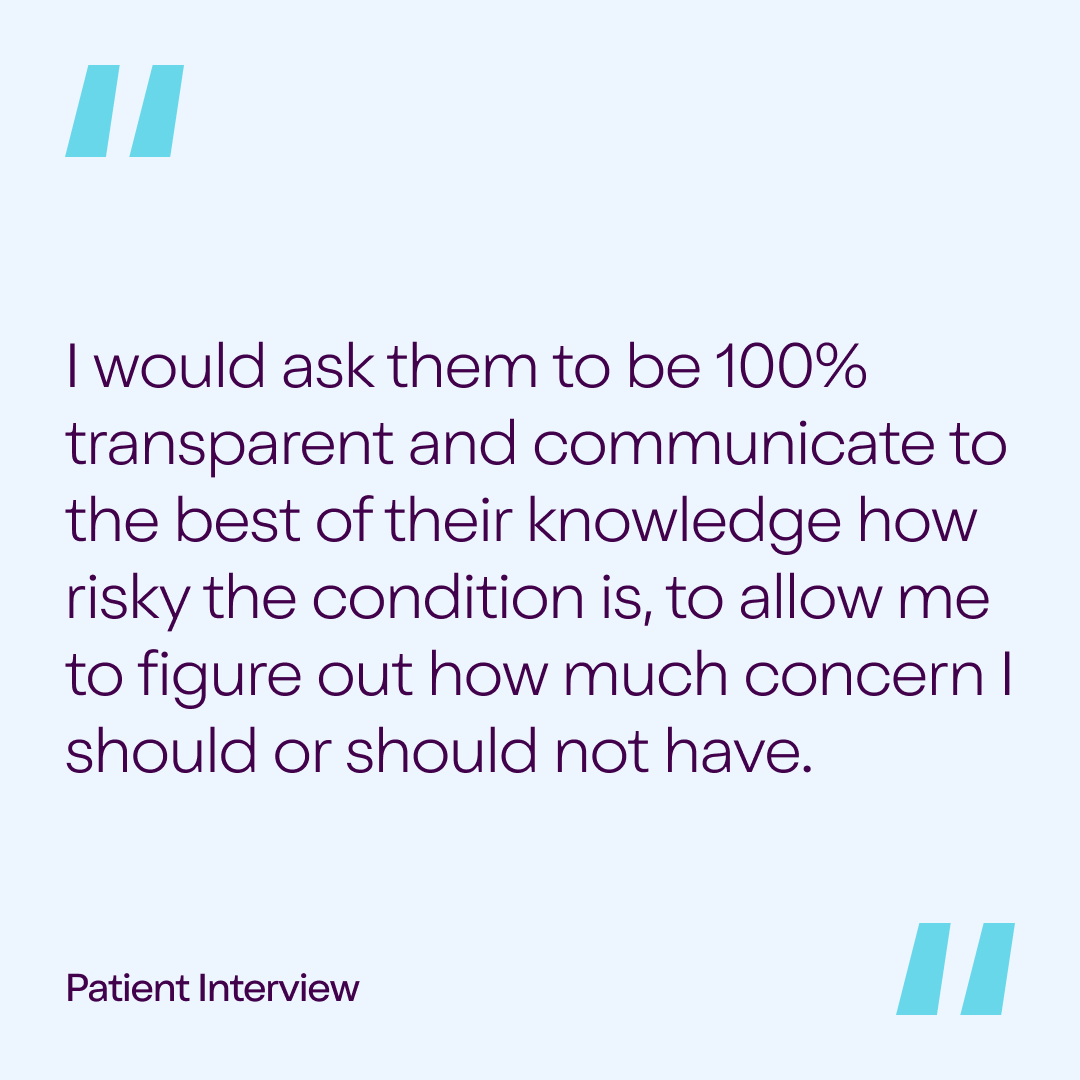
Clinicians, particularly in primary care, often try to avoid alarming patients by downplaying the seriousness of a possible diagnosis. But this study shows in patients’ own words that they want to know why a test is needed, what it could find, how serious it might be if it’s delayed, and how to schedule it.
This study is a reminder to patients that they can speak up. If a test or next step isn’t clear, they can ask questions, share concerns, and take time to understand what’s happening. Getting a test should be a shared decision, and patients have every right to pause, ask for more details, and use tools like OpenNotes or portal messages to get the answers they need.
Healthcare system leaders and administrators can use these findings as evidence to improve how referrals and follow-up testing are handled. This can include enabling patients to self-book appointments or tests, flagging when tests need to happen quickly, sharing answers to common questions and making this increasingly accessible, and setting up follow-up triggers for missed appointments. Closing testing loops is a systems problem that needs systems-level solutions.
Join the Conversation
We’d love to hear your take—join the conversation with us on LinkedIn and share your thoughts!