
Summary
UCSF CODEX reconnected with Shawn Vainio, MD, a family physician in rural Alaska, to share an exciting update on Project HUSKIES: High-Resolution Ultrasound Knowledge and Innovation Ensuring Success, which he originally pitched at our DEX25 inaugural Shark Tank session.
Learn more directly from Shawn in the video below or read the Q&A.
Q&A Video ft. Shawn Vainio, MD
__
Note: The responses below are highlights from the Q&A video.
Introduction
My name is Shawn Vainio, and I’m a family physician in rural Alaska, where I’ve been practicing for a little over 20 years. I spent the first 12 years of my career in Kodiak and have been working out in the Yukon-Kuskokwim Delta for the last nine years. I had the pleasure of participating in the Shark Tank competition at DEX25.
What is Project HUSKIES?
The project that I tried to illuminate during the DEX25 Shark Tank competition was called Project Huskies. Huskies stands for High Resolution Ultrasound Knowledge and Innovation Ensuring Success. With the help of four other instructors, we have conducted monthly education sessions for the providers in an area that is sparsely populated, which stretches across an area approximately the size of the state of Oregon. Over the past year, we’ve trained over 45 people to use ultrasound technology in areas where no other comparable imaging modalities are available (no MRI and only CT and X-ray in hub village and X-ray in 5 subregional villages, leaving 52 villages with no imaging capability). During the presentation, I shared that my dream was to expand ultrasound education beyond the musculoskeletal platform we had been trialing to include all modalities.
What does this matter?
In revealing during the Shark Tank competition that my goal was to expand ultrasound education throughout rural Alaska. The intention of the escalation of the project was to expand to cardiac, lung, abdomen, trauma, soft tissue, vascular, OB-GYN applications, and extend the education and use of the technology out to areas of the state that do not have access to other imaging modalities like CT, X-ray, or MRI, and ultrasound, for that matter. And in doing so, we would be able to improve diagnosis by improving the time to diagnosis, the accuracy of diagnosis, and being able to communicate the diagnosis to the patient at the point of care. And we have been lucky enough, through an application to the RHTP cycle, to be granted funding to go ahead with that project over the next year.
Who does this impact?
The people who will be impacted by this project are multifold. The two common groups that I would think of are, number one, the providers, and number two, the patients. On the provider level, the project will include training from the physician level down to the local healthcare providers. So, training will include physicians, nurse practitioners, PAs, paramedics, and what we call community health aides in Alaska. And then, on a personal level, people living in remote areas, some without access to running water, sewer, basic sanitation, or road access to any hospital system, will have access to technology at the point of care. It’s really game-changing technology for people out in the remote, rural, austere, and frontier locations.
__
Share your thoughts and join the conversation on LinkedIn.
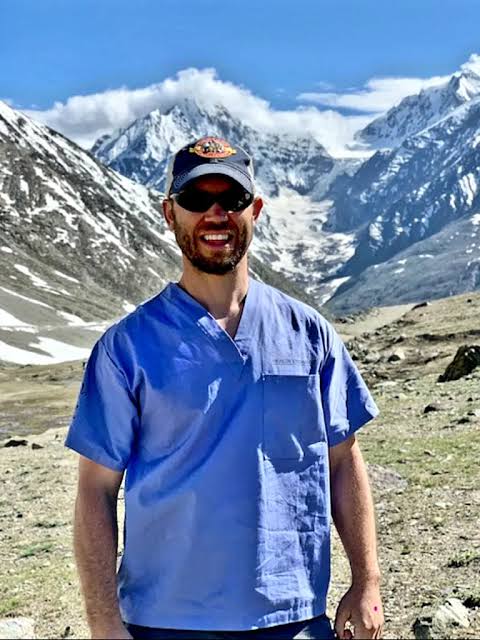
Shawn Vainio, MD
Family Physician in Rural Alaska