
Editor's Pick: Gender bias in the clinical reasoning steps of medical students
Gender bias in the clinical reasoning steps of medical students: a critical examination
Le Boudec J, Potarca G, Félix S, Schwarz J, Guth M, Clair C. BMC Med Educ. 2026;26(1):867. Published 2026 Apr 17. doi:10.1186/s12909-026-09184-w
__
Q&A Video ft. Katie Brooks, MD
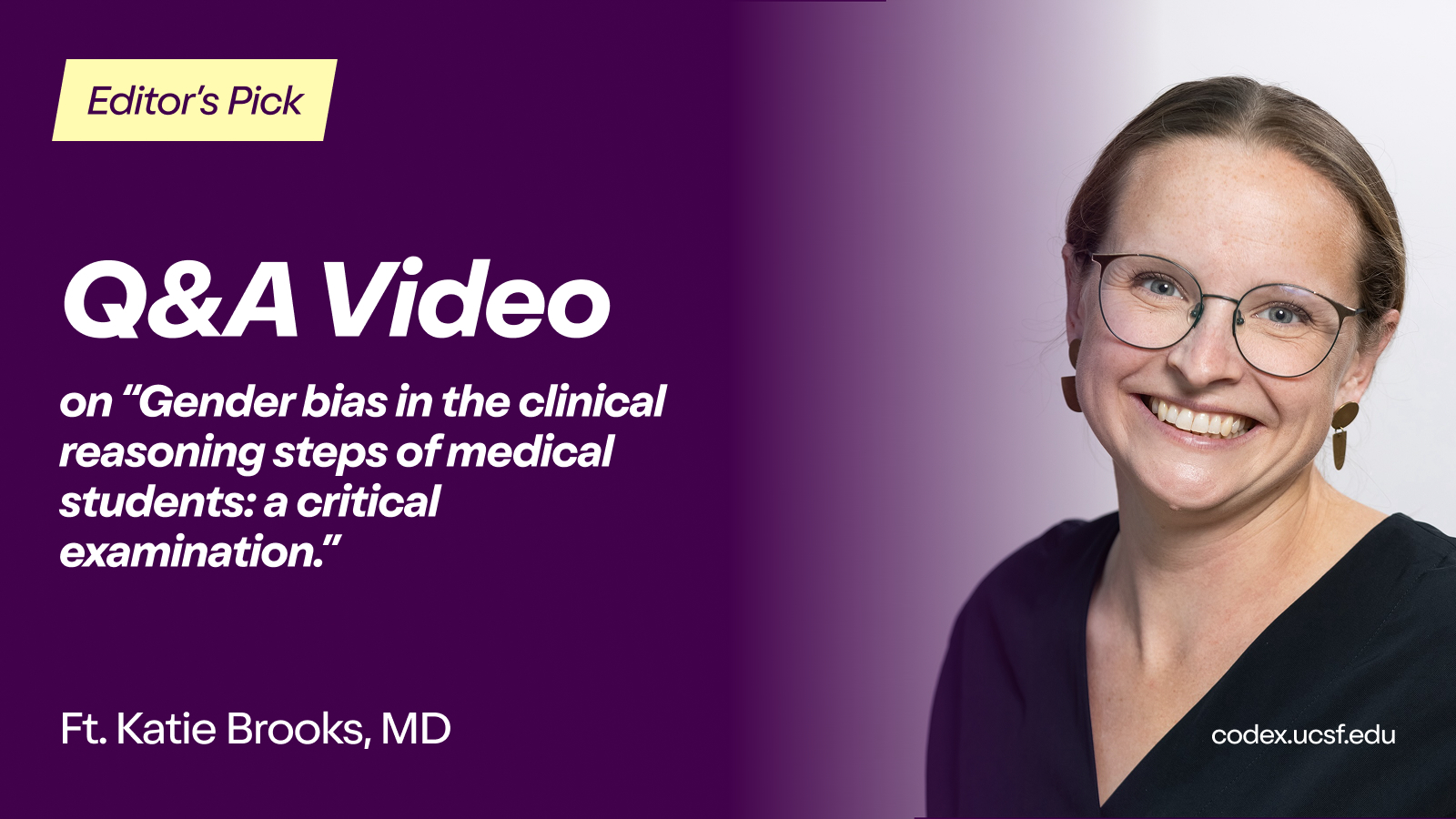
Watch the full Q&A here.
Katie Brooks, MD
Associate Professor of Medicine
UCSF San Francisco General Hospital
__
(Note: The responses below are highlights from the Q&A video above from Katie Brooks, MD.)
What's the point?
This paper was really interesting to me. It looked at OSCE exams, which are clinical skills exams done commonly across medical schools, for 105 fifth-year medical students at the University of Lausanne in Switzerland. The same clinical script was used for all of the students. It was a 57-year-old presenting to the primary care clinic with unintended weight loss, and trained examiners scored students on things like history taking, physical exam skills, as well as their diagnostic and therapeutic management.
So, a few of the key findings: For history, both male and female students were less likely to ask women about alcohol consumption. Male students were less likely to ask women about their occupational history. Overall, the history-taking skill scores were similar between women and male standardized patients. However, there was a trend towards male students taking less highly scored histories with female patients. For physical exam, overall, female standardized patients were less thoroughly examined than male patients. More specifically, male students were less likely to complete a cardiac auscultation or examine peripheral pulses on female standardized patients. Despite these differences in the study, the overall differentials and leading diagnoses that students came up with at the end were scored pretty similarly across student and standardized patient gender.
Why does this matter?
So why does this matter? There is growing literature that shows that diagnostic inequity exists based on factors like race, gender, and comorbidities like psychiatric illness or substance use disorders.
However, there are very few studies that really try to elucidate the potential mechanisms on how this occurs. The idea that the diagnostic process is influenced by factors outside of our brains is gaining a lot of momentum in diagnostic literature. It’s often called situated cognition. And this is just a very concrete example of how this might occur.
If we’re less likely to ask women patients if they’re drinking alcohol, we may be less likely to miss an alcohol use disorder in a patient who, for example, comes in with a fall or an injury. Or, similarly, we might miss early aortic stenosis in our older women patients if they’re less likely to have their heart listened to.
Who does this impact?
I think this impacts clinicians, patients, and educators alike. We don’t have great data on which bias mitigation strategies may specifically interrupt these forms of bias, particularly in clinical environments. And, interestingly enough, the authors disclosed that these students had actually gone through several trainings on gender bias across medical school.
But the social psychology literature really supports that many of these strategies may mitigate biases when working with patients whose identities are different than our own. These include things like mindfulness, limiting distractions, individuating people outside of their stereotyped identities, and avoiding stigmatizing language in how we talk and write about patients. And these are strategies that clinicians can emulate when they are also educating trainees.
I’m hopeful, and this is part of what I study, that, in coming years we’ll have a clearer sense of which bedside strategies better promote diagnostic excellence and diagnostic equity.
__
Share your thoughts and join the conversation on LinkedIn.
About Editor's Picks
Curated by the UCSF CODEX team, each Editor’s Pick features a standout study or article that moves the conversation on diagnostic excellence forward. These pieces offer meaningful, patient-centered insights, use innovative approaches, and speak to the needs of patients, clinicians, researchers, and decision-makers alike. All are selected from respected journals or outlets for their rigor and real-world relevance.
View more Editor's Picks here.